Executive Summary
Chad, a landlocked Central African nation spanning 1.28 million km², possesses an under-exploited but considerable beekeeping potential. The Sudano-Guinean and southern Sahelian zones concentrate diverse floral resources — shea, acacias, Parkia, neem — enabling honey production for nine to ten months per year.
The sector remains dominated by traditional practices (bark and clay hives), but structuring initiatives do exist, most notably the GAEL cooperative in Koumra (Mandoul), which already exports to the United States and France.
"Chadian honey sells for between 3,000 and 6,000 FCFA/kg in local markets, with a potential premium of 20 to 40% for certified organic honey — placing modernized beekeeping among the most profitable agricultural activities in the country." — MEDASH Analysis, June 2026
1. Context and Natural Resources
1.1 Geography and Bioclimatic Zones
Chad spans three major bioclimatic zones, two of which present direct beekeeping interest: the Sahelian zone (rainfall 200–600 mm/yr, shrub savanna with acacias) and the Sudanian and Sudano-Guinean zone (600–1,200 mm/yr, rich biodiversity — the core of Chad's beekeeping potential). The northern Saharan zone is near-desert with no significant beekeeping interest.
1.2 Seasonal Floral Resources
| Season | Months | Main melliferous plants | Intensity |
|---|---|---|---|
| Short dry season | Nov – Jan | Combretum spp., Acacia albida, mango trees | Moderate |
| Early dry season | Feb – Apr | Acacia senegal, Ziziphus mauritiana, kapok tree | High |
| Early rainy season | May – Jul | Shea (Vitellaria paradoxa), Parkia, neem | Very High |
| Full rainy season | Aug – Oct | Melastomataceae, Combretum, herbaceous plants | Moderate |
1.3 The Local Bee: Apis mellifera adansonii
The local African honey bee (Apis mellifera adansonii) is robust, resistant to common parasites, and climate-adapted. It can forage up to 5 km from the hive, though its tendency to abscond (abscondment) in the dry season is the primary challenge for beekeepers. Productivity: 10–25 kg/year in traditional hives, 25–50 kg/year in modern (Langstroth or Kenya Top Bar) hives.
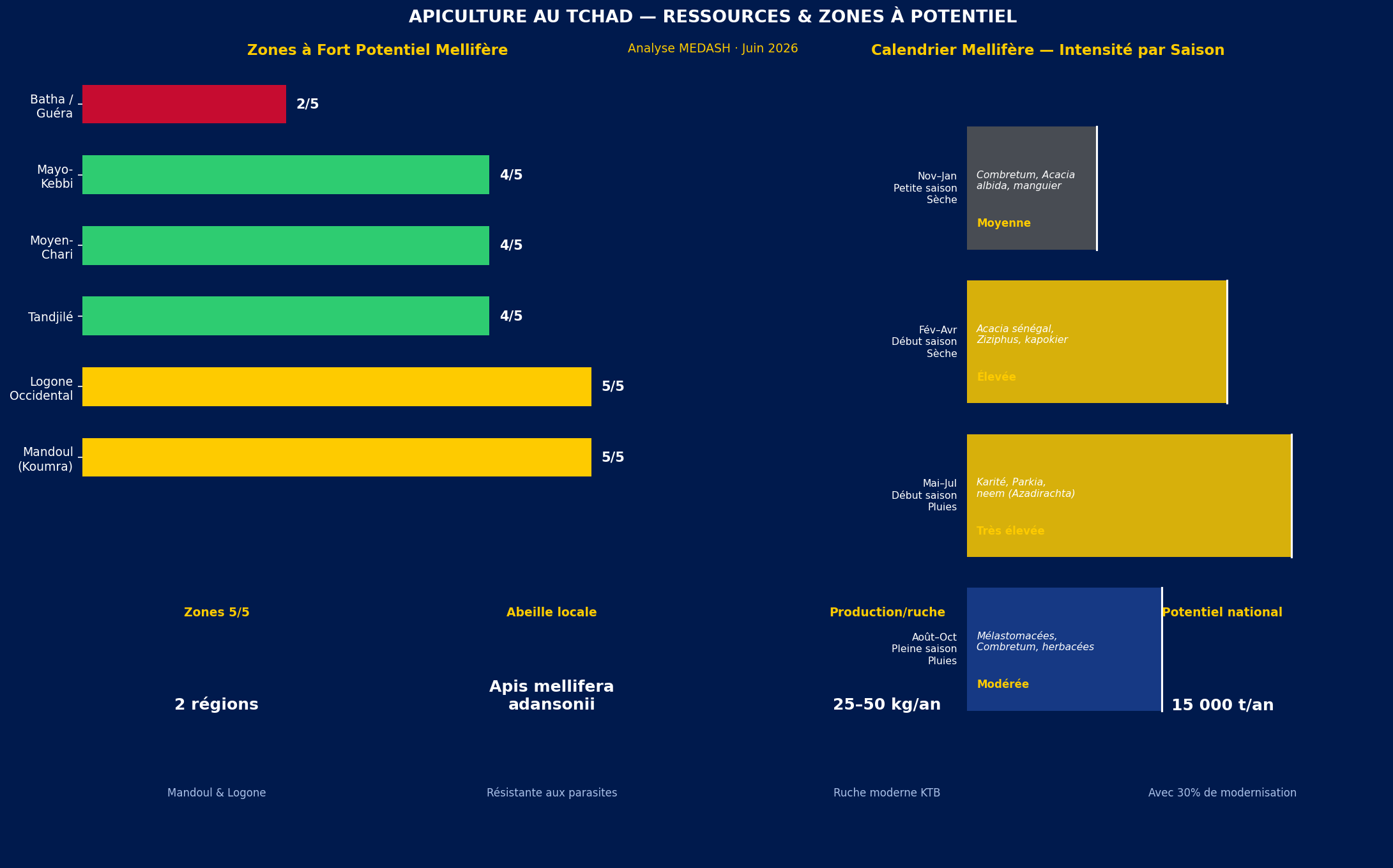
Fig. 1 — High-potential melliferous zones and seasonal floral resource calendar
| Region / Prefecture | Bioclimatic zone | Key resources | Potential |
|---|---|---|---|
| Mandoul (Koumra) | Sudano-Guinean | Shea, cailcedrat, neem, mango trees | 5 / 5 |
| Logone Occidental | Sudano-Guinean | Gallery forests, Combretum, legumes | 5 / 5 |
| Tandjilé | Sudano-Guinean | Shea, Parkia, Melastomaceae | 4 / 5 |
| Moyen-Chari | Sudanian | Wooded savanna, acacias, fruit trees | 4 / 5 |
| Mayo-Kebbi | Sudanian | Neem, gum trees, Combretum | 4 / 5 |
| Batha / Guéra | Sahelian | Acacias, gum trees (seasonal) | 2 / 5 |
2. Current State of the Sector
2.1 Production Estimates
| Indicator | Estimate | Source / Note |
|---|---|---|
| Active beekeepers | 15,000 – 25,000 | Majority in southern Chad |
| Annual honey production | 800 – 1,500 tonnes | ~80% from traditional hives |
| Modern hive production | ~150 – 300 tonnes | Rapidly growing sub-sector |
| Beeswax production | 80 – 150 tonnes/yr | Significantly under-valorized |
| Estimated hive count | 300,000 – 500,000 | < 10% improved type |
| Identified cooperatives | ~30 – 50 | Concentrated in Mandoul, Logone, Tandjilé |
| Traditional hive yield | 5 – 15 kg/yr | Low due to absconding losses |
| Modern hive yield (KTB) | 20 – 35 kg/yr | Confirmed on pilot projects |
2.2 Reference Case: GAEL Cooperative — Koumra, Mandoul
The GAEL Cooperative (Groupe des Apiculteurs Expérimentés du Logone) is the benchmark to replicate. Production: 2 tonnes (2012) → 15.5 tonnes (2015). Coverage radius: 120 km around Koumra. Markets: local + exports to the USA and France. Internationally recognized cooperative model.
3. Market Analysis
3.1 Domestic Prices by Distribution Channel
| Distribution channel | Indicative price (FCFA/kg) | Note |
|---|---|---|
| Direct sale at producer (bulk) | 1,500 – 2,500 | Unprocessed producer price |
| Local market / souk | 3,000 – 4,500 | Unfiltered, unpackaged honey |
| Urban shops / grocery stores | 4,500 – 6,000 | Jar honey, basic label |
| N'Djamena supermarkets (premium) | 6,000 – 10,000 | Packaged, branded honey |
| Regional export (Cameroon, CAR) | 2,500 – 4,000 | CIF price departure Chad |
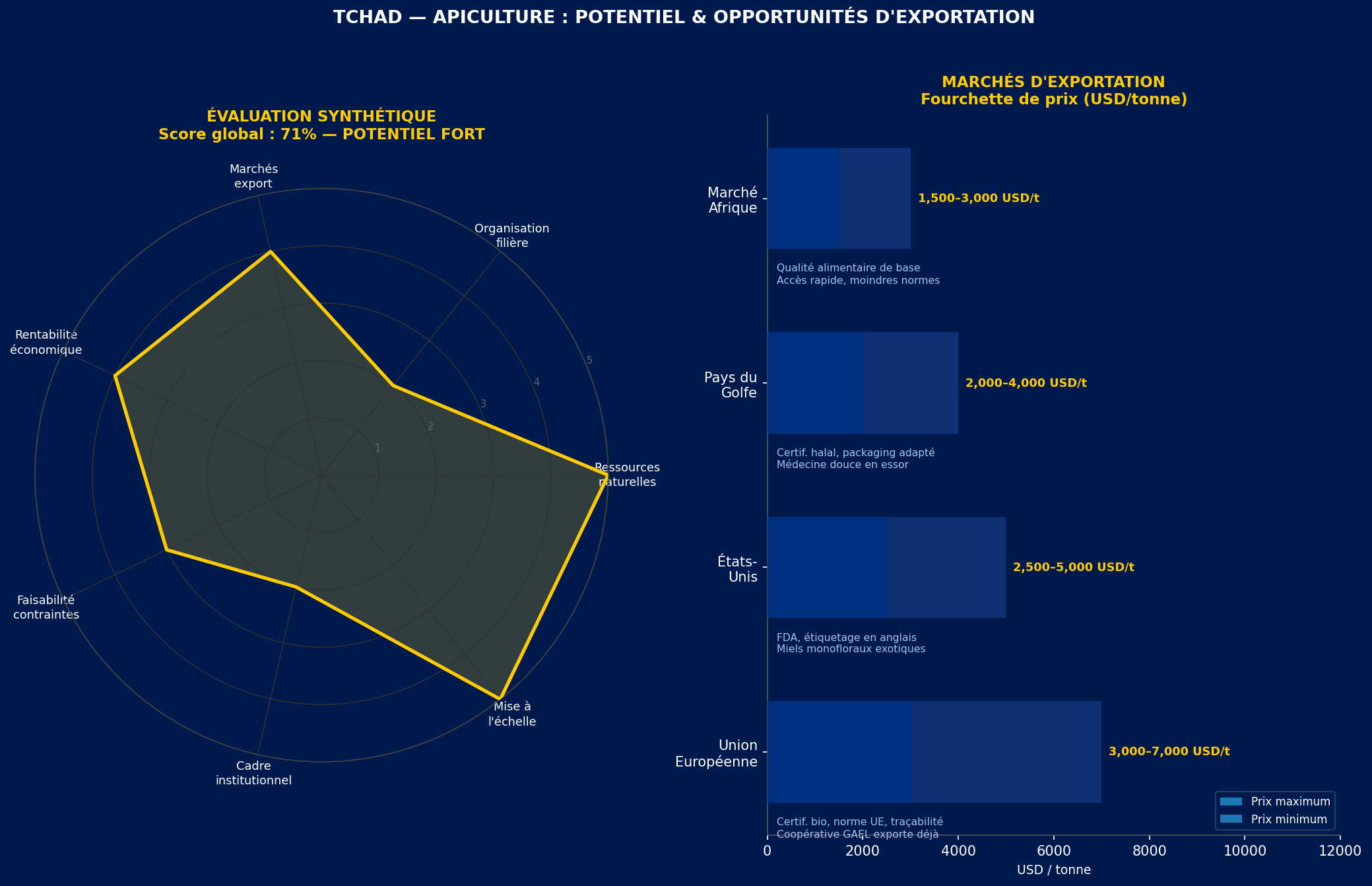
Fig. 2 — Export markets (USD/tonne price ranges) and synthetic evaluation of beekeeping potential
3.2 International Export Opportunities
| Target market | Export price (USD/t) | Key opportunity | Requirements |
|---|---|---|---|
| European Union | 3,000 – 7,000 | Organic, single-origin, fair-trade honey | Organic cert., EU honey directive, traceability |
| United States | 2,500 – 5,000 | Premium, exotic monofloral honeys | FDA, English labelling |
| Gulf Countries | 2,000 – 4,000 | Natural halal honey, holistic medicine | Halal certification, adapted packaging |
| African regional market | 1,500 – 3,000 | Volume, fast access, lower standards | Basic food quality |
4. Economic Models and Revenue Potential
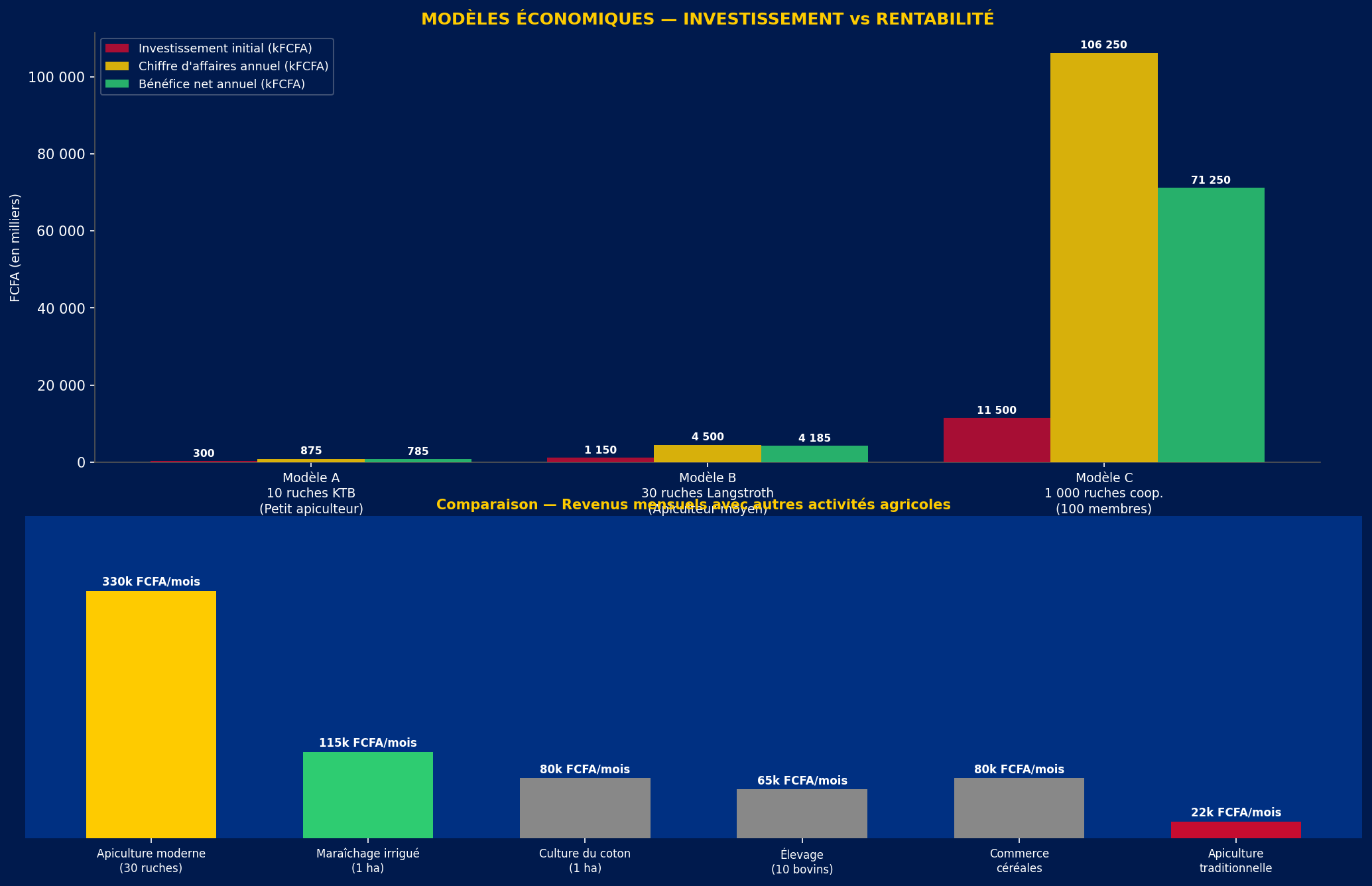
Fig. 3 — Investment, revenue and monthly income across three economic models vs. other agricultural activities
Model A — Small beekeeper
10 KTB hives
Model B — Mid-scale beekeeper
30 Langstroth hives
Model C — Cooperative
100 members, 1,000 hives
5. Value Chain and Processing
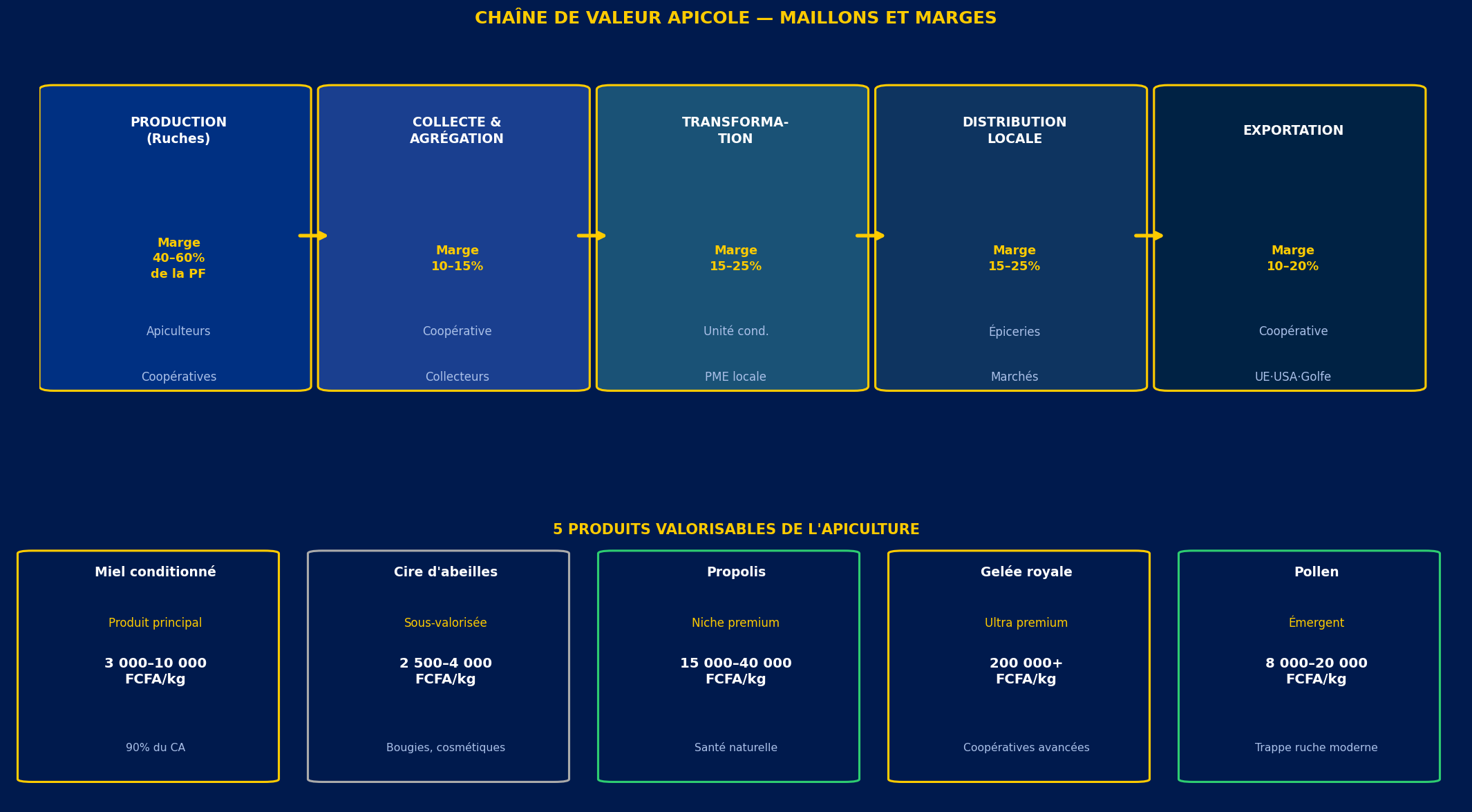
Fig. 4 — Beekeeping value chain mapping and 5 valorizable products with price ranges
6. Strategic Recommendations
6.1 Public Policies to Implement
- 1Create a National Beekeeping Development Agency (ANDA) within the Ministry of Livestock, with a dedicated budget and a ten-year roadmap.
- 2Adopt a National Beekeeping Master Plan 2026–2035 with quantified targets: 100,000 modern hives, 10,000 tonnes of certified honey annually.
- 3Exempt beekeeping equipment (hives, extractors, PPE) from VAT for 10 years to stimulate modernization.
- 4Establish a dedicated agricultural guarantee fund for beekeeping, with subsidized interest rates (target: 6–9% instead of 18–24%).
- 5Integrate beekeeping into conditional cash transfer programmes for vulnerable households.
- 6Regulate and sanction destructive practices (bush fires, hive destruction during harvesting) through appropriate legislation.
6.2 International Partners
7. Synthetic Potential Assessment
MEDASH supports regional development actors
Beekeeping feasibility studies, cooperative structuring, financing package design — we bring our local expertise to turn potential into reality.
Contact us →